
Botox vs Filler: Which One Treats Your Concern?
Medically reviewed by Nicole Francis, NP, on November 26, 2026.
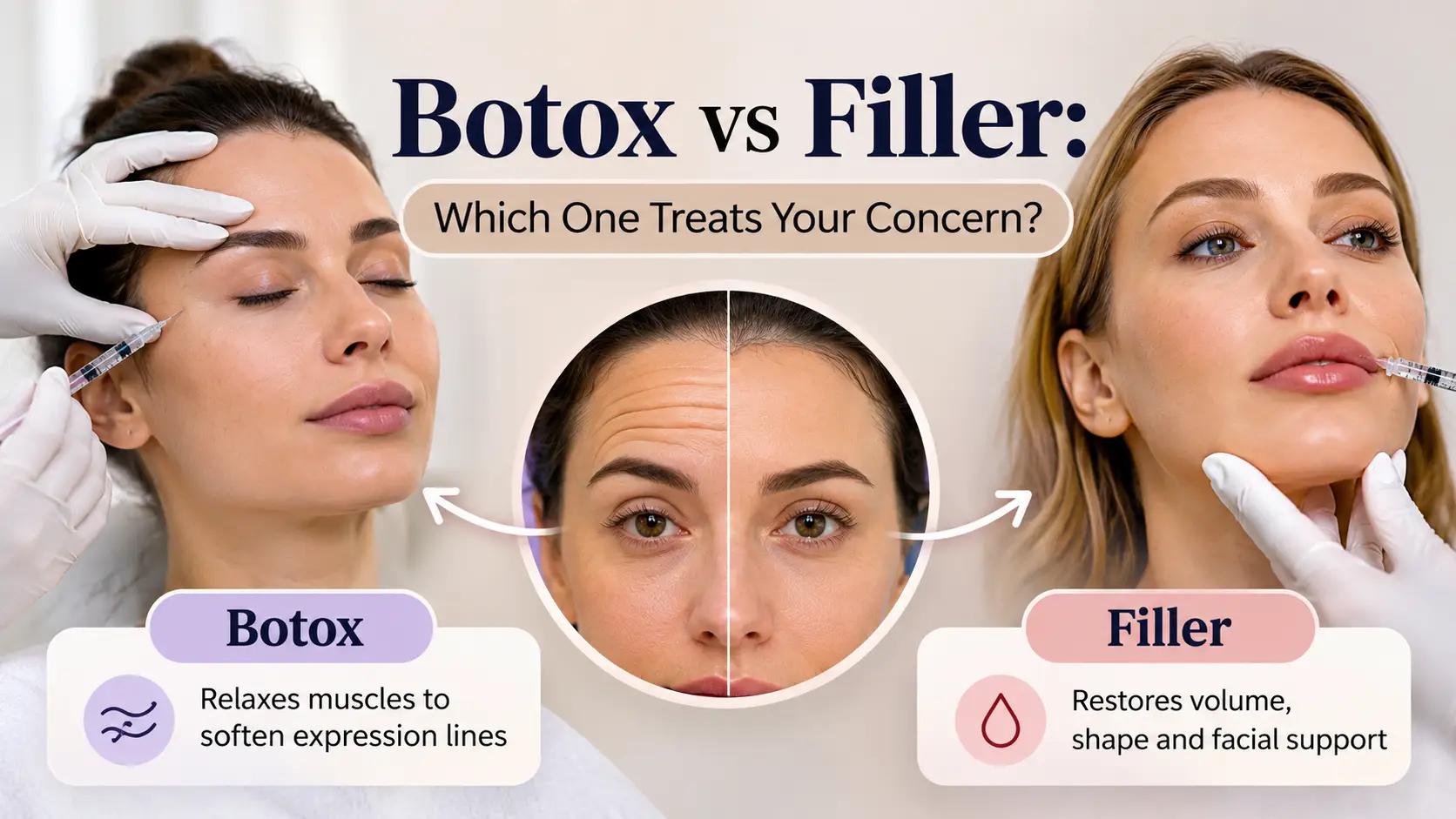
Botox vs filler comes down to what causes your concern. Botox relaxes the muscles behind expression lines, such as forehead lines, frown lines and crow's feet. Dermal filler adds volume to smooth lines and hollows that stay visible at rest, such as smile lines, thin lips or flat cheeks. Some faces need one, and some need both.
TL;DR
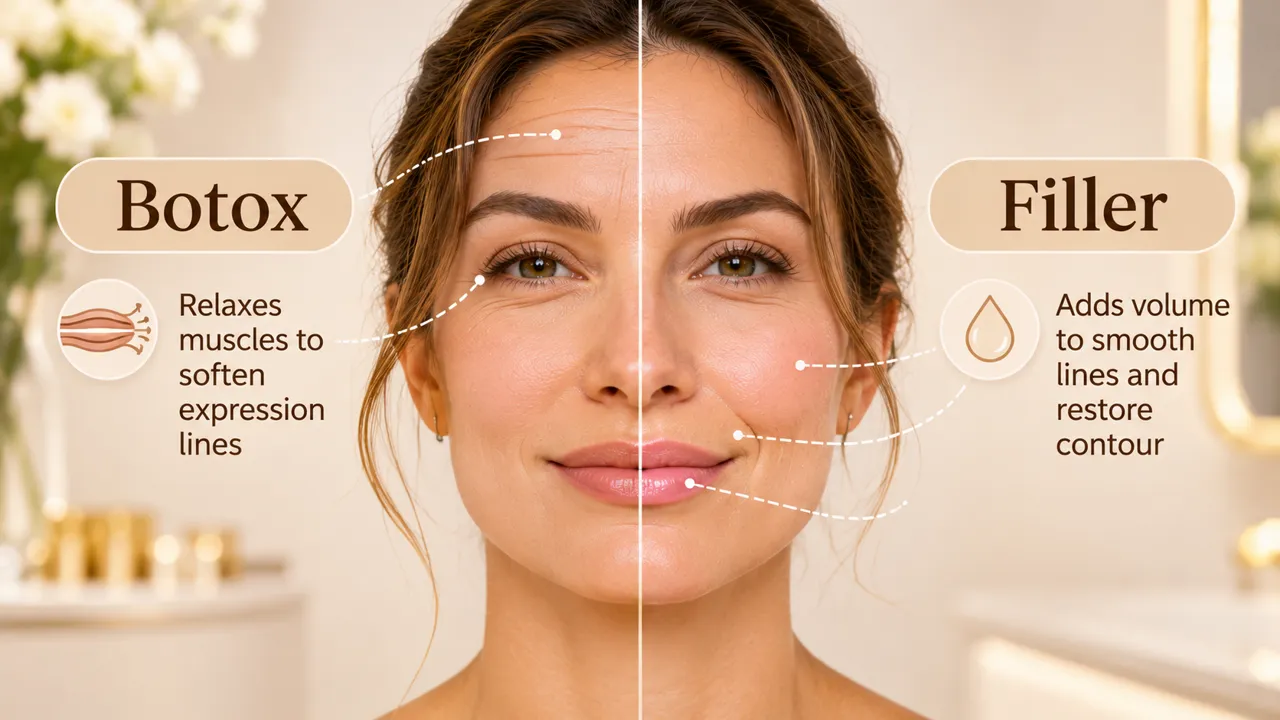
Botox (a neuromodulator) softens lines caused by muscle movement.
Filler (usually hyaluronic acid) restores lost volume and fills lines that stay at rest.
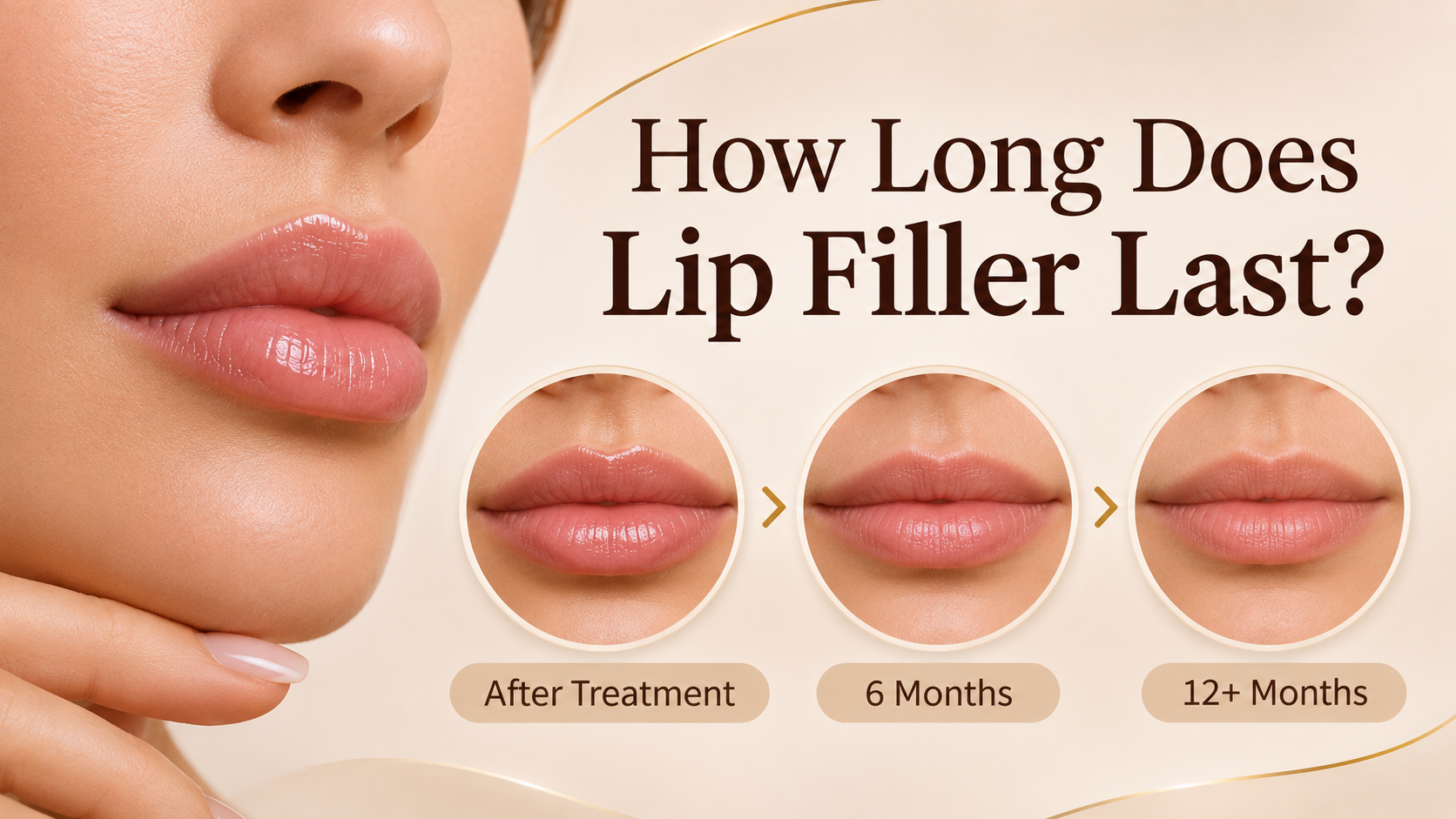
Per the clinic, Botox tends to last about 3 to 6 months and filler about 6 to 18 months. Results vary.
Many people use both, on different areas, for different jobs.
Your injector confirms which one fits your concern at a consultation.
Botox vs Filler: The Quick Difference
Botox stops a line from forming. Filler fills in what has already been lost.
That one difference drives everything else: where each goes, how fast it works and how long it lasts.
Compare | Botox (neuromodulator) | Dermal filler |
|---|---|---|
What it is | A purified protein that temporarily relaxes targeted muscles | A gel, usually hyaluronic acid or calcium hydroxylapatite |
Main job | Softens lines caused by movement | Adds volume, shape and support |
Typical areas | Forehead, frown lines (11s), crow's feet | Lips, cheeks, smile lines, chin, jawline, under-eyes |
When you see it | Gradually, over several days | Usually right away, once swelling settles |
How long it tends to last | About 3 to 6 months, per the clinic | About 6 to 18 months, per the clinic |
Downtime | Minimal, per the clinic | Minimal, per the clinic; swelling is common |
You can read more on each treatment on the Botox and Dysport injections page.
Moving Lines or Lines at Rest? A 30-Second Self-Check
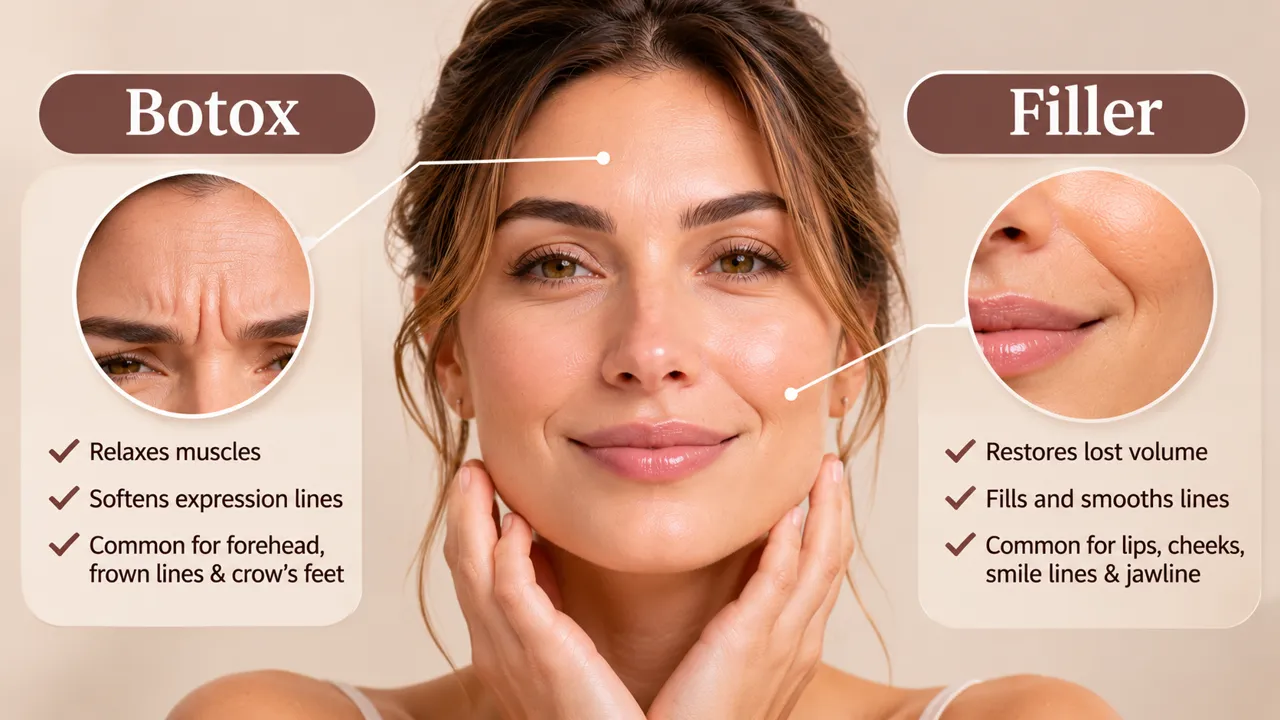
Whether a line moves or stays is the clearest clue to which treatment fits.
Most people never look at their lines this way. It takes a mirror and half a minute.
How to check your lines
Relax your face fully and look straight into a mirror in good light.
Note any lines you see now. These are lines at rest (static lines).
Raise your eyebrows, frown and smile widely. Note which lines appear or deepen.
Compare the two lists.
What you notice | What it usually means | Treatment often discussed |
|---|---|---|
Line only appears when you move | Dynamic line, caused by muscle | Botox |
Line is visible when relaxed, deepens with movement | Mixed: muscle plus early creasing | Botox first, sometimes filler later |
Line or hollow is visible at rest, little change with movement | Volume loss or a fold | Filler |
Area looks flat, thin or sunken | Volume loss | Filler |
This self-check is a starting point, not a diagnosis.
→ Movement = muscle → Botox conversation
→ Volume loss = support → filler conversation
Which One Treats Your Concern? A Concern-by-Concern Guide
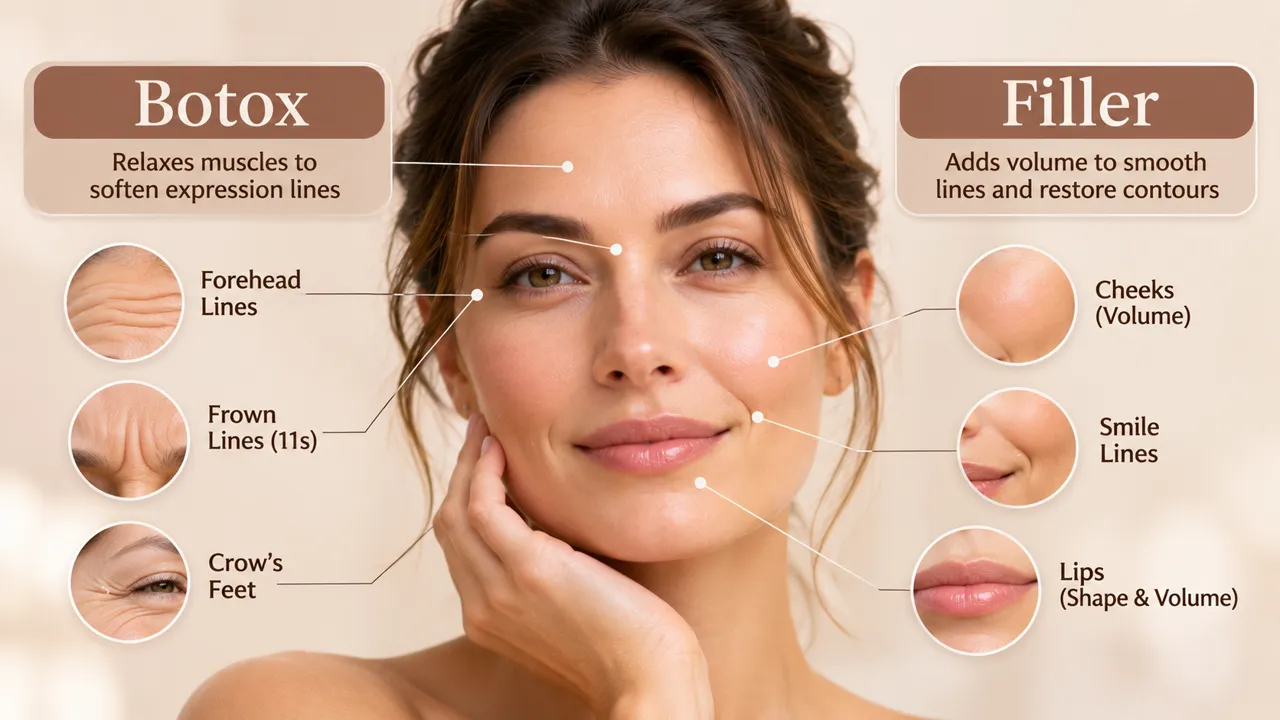
Most upper-face lines respond to Botox, while most lower-face and volume concerns respond to filler.
What we are evaluating on:
What causes the concern (muscle movement or volume loss)
Where it sits on the face (upper, mid or lower)
Whether it is visible at rest
How long you want results to last
Concern | Usually discussed first | Why |
|---|---|---|
Horizontal forehead lines | Botox | Caused by the forehead muscle lifting the brows |
Frown lines (11s) between the brows | Botox | Caused by repeated frowning |
Crow's feet | Botox | Caused by smiling and squinting |
Smile lines (nasolabial folds) | Filler | A fold linked to mid-face volume loss |
Marionette lines | Filler | Lines from the mouth corners, linked to lower-face volume loss |
Thin or uneven lips | Filler | Adds shape and volume |
Flat cheeks or under-eye hollows | Filler | Restores support |
Weak chin or soft jawline | Filler | Adds structure |
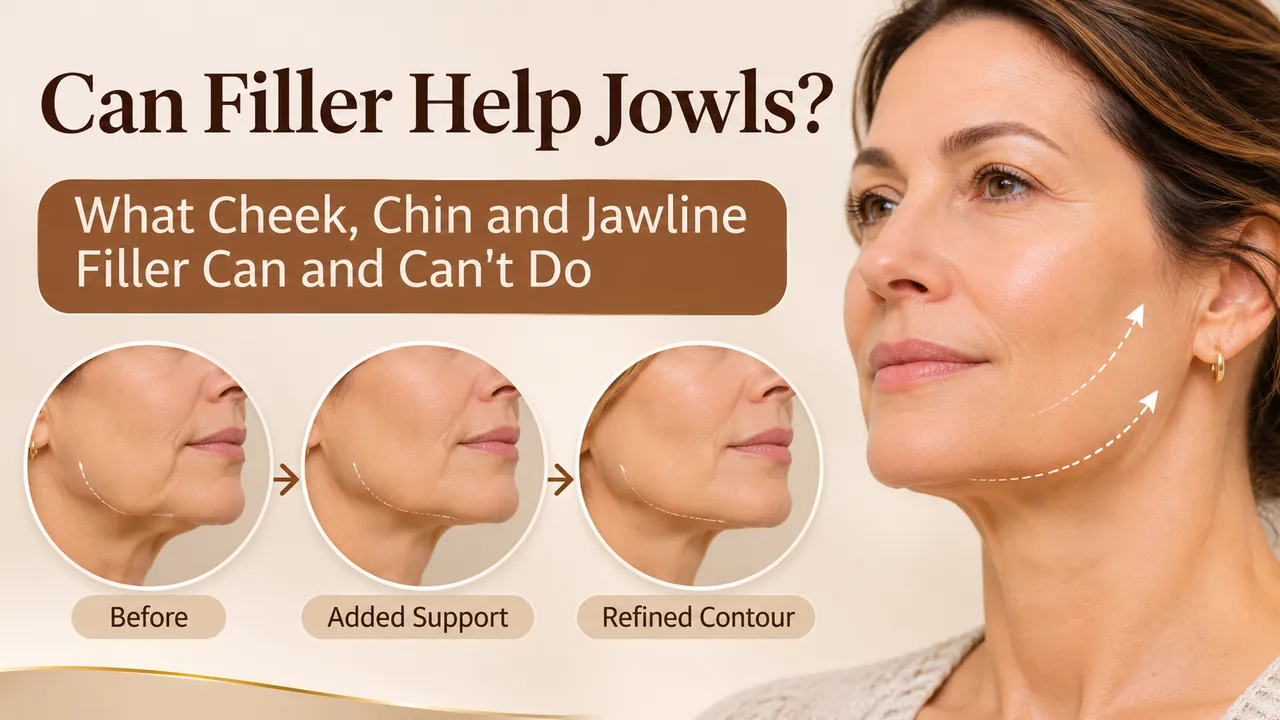
Jowls | Filler may help mildly | Neither treatment lifts heavy sagging skin |
Botox vs filler for forehead lines
What it is: horizontal lines from raising your brows.
Botox tends to be the first option, because the lines come from movement.
Deep lines that remain at rest may soften gradually with repeated Botox.
Filler is rarely the first choice here.
→ Best discussed if your forehead lines deepen when you raise your eyebrows.
Frown lines and crow's feet
What they are: lines from frowning, smiling and squinting.
Both areas are classic Botox areas.
Crow's feet that stay visible at rest may need a different plan, such as skin quality treatments.
→ Best discussed if these lines bother you most when you're expressive.
Smile lines and marionette lines
What they are: folds and lines around the nose and mouth.
These are usually filler territory, because they reflect volume and support.
Botox is not designed to fill folds.
→ Best discussed if the lines are visible in photos even when you're not smiling.
Lips
What it is: lip shape, volume or definition.
Lip filler adds volume and shape.
A "lip flip" uses Botox to relax the lip muscle slightly. It is an off-label use in Canada, so ask your injector to explain it.
→ Best discussed if you want fuller lips (filler) or a subtle upper-lip roll with no added volume (ask about the lip flip).
Jowls and lower-face sagging
What it is: loss of definition along the jaw.
Filler in the cheeks, chin or jawline can improve contour.
Neither injectable lifts loose skin. Heavy sagging needs a different conversation.
→ Best discussed if your jawline looks softer than it used to, but skin laxity is mild.
Botox vs Dermal Filler: How Each One Works
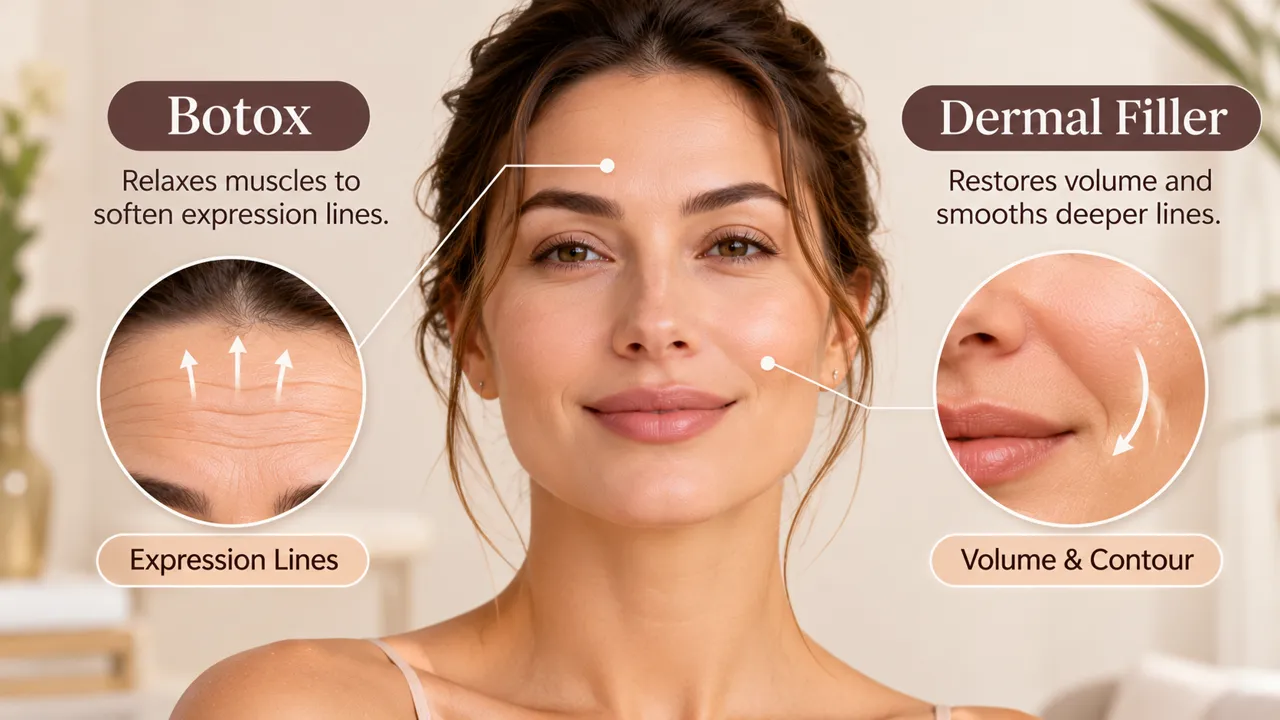
Botox works by quieting a muscle, while dermal filler works by adding something under the skin.
How Botox works
Botox is a neuromodulator. It blocks the nerve signal that tells a targeted muscle to contract.
The muscle relaxes, so the skin above it creases less.
Results tend to appear gradually over several days and settle over about two weeks.
As the effect wears off, movement returns gradually.
A clinical review of botulinum toxin explains how it blocks nerve signals to muscles.
How dermal filler works
Filler is a gel placed under the skin to replace volume or add structure.
Per the clinic, fillers are hyaluronic acid or calcium hydroxylapatite.
Hyaluronic acid is a substance your skin already contains. It holds water.
Results are usually visible straight away, though swelling can hide the final look for a few days.
Onset, duration and maintenance at a glance
Compare | Botox | Filler |
|---|---|---|
First changes | Within several days | Right away |
Settled result | About 2 weeks | After swelling settles |
How long it tends to last | About 3 to 6 months, per the clinic | About 6 to 18 months, per the clinic |
What affects duration | Muscle strength, area, dose, metabolism | Product type, area, movement, metabolism |
Maintenance | Regular repeat visits | Less frequent top-ups |
Want to see every option side by side? The injectables overview lists all injectable treatments in one place.
Wait, You Might Be Thinking: "Aren't Botox and Fillers the Same Thing?"
No. They are different products with different jobs.
The confusion is understandable, because both are injections and both target signs of aging. But Botox changes how a muscle moves, while filler changes how much volume sits under the skin.
The difference between Botox and fillers also shows in the result:
Too much Botox in the wrong place can look stiff.
Too much filler in the wrong place can look heavy or puffy.
Neither is the goal. A careful plan uses the right product, in the right amount, in the right place.
Will I Look Frozen or Overfilled?
Not if the plan is conservative and tailored to your face.
"Frozen" and "overfilled" are the two fears clients raise most often. Both usually come from using too much, too fast, rather than from the product itself.
What tends to keep results natural
Starting small. A lighter first treatment can be built on later.
Treating the cause. Filling a line caused by muscle, or relaxing a hollow, rarely looks right.
Respecting expression. Some movement is a feature, not a flaw.
Follow-up. A review visit allows small adjustments.
A pattern injectors often describe is that first-time clients worry about looking different, yet most simply want to look less tired.
Pro tip: Bring two photos to your consultation: one of your face relaxed and one mid-smile, so your injector can see exactly which lines move and which stay.
Our guide to natural-looking aesthetic treatments covers this in more depth.
Can You Have Botox and Filler Together?
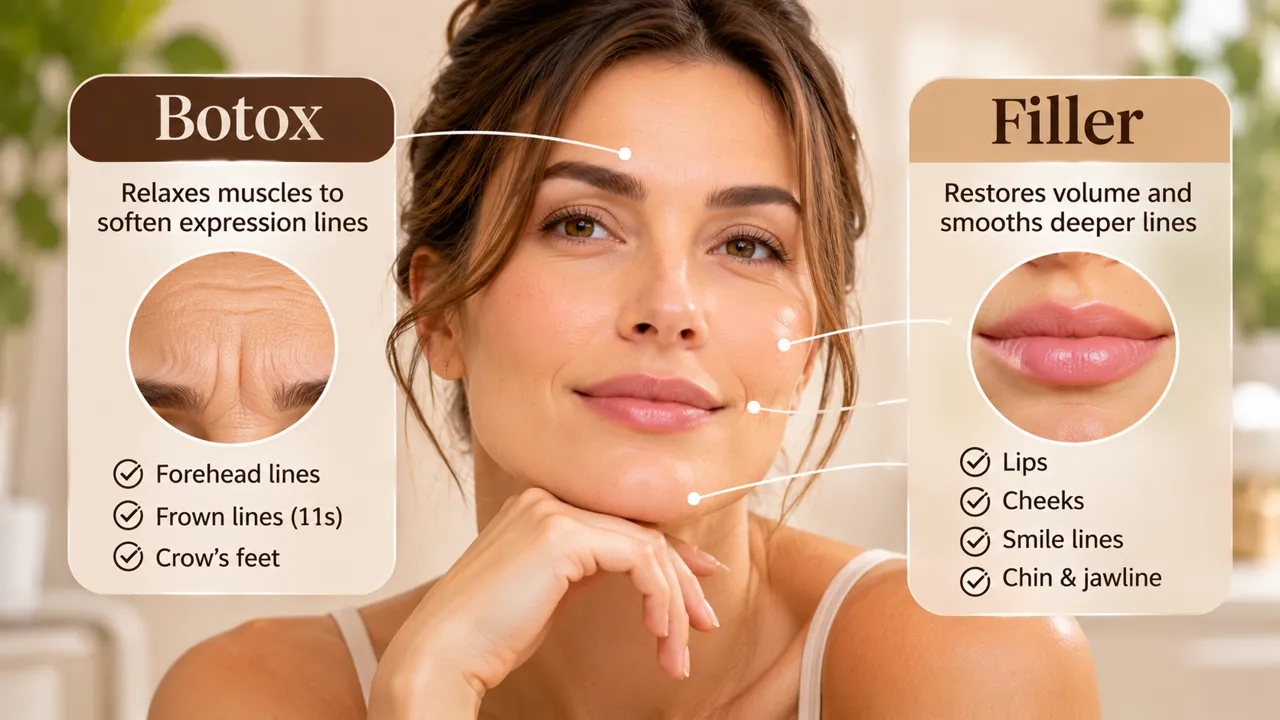
Yes, many people combine them, because they solve different problems.
A common combination is Botox for the upper face and filler for the lower face.
Order and timing
Your injector decides the sequence. A few common approaches:
Approach | When it is often used |
|---|---|
Same visit, different areas | When areas don't overlap and your provider is comfortable doing both |
Botox first, filler later | To see how relaxed muscles change the face before adding volume |
Filler first, Botox later | When volume loss is the main concern |
There is no single correct order. The plan depends on your face, your goals and your provider's assessment.
Which one should a first-timer start with?
Many first-timers start with the concern that bothers them most.
If expression lines bother you → ask about Botox.
If hollows or thin lips bother you → ask about filler.
If you are unsure → a consultation can map your priorities.
New to wrinkle-relaxing injections? Our first-time Botox guide walks through the first appointment.
Botox vs Filler: Safety, Comfort and Side Effects
Both treatments are generally well tolerated when performed by trained, regulated health professionals, but neither is risk-free.
Most side effects are mild and temporary. Knowing them in advance makes the first visit less stressful.
Common side effects compared
Effect | Botox | Filler |
|---|---|---|
Redness or small bumps at injection sites | Common, brief | Common, brief |
Swelling | Mild | Common, especially in lips |
Bruising | Possible | Possible, more common |
Headache | Sometimes | Rare |
Temporary drooping of a brow or eyelid | Uncommon | Not applicable |
Lumps or unevenness | Not applicable | Possible, often settles |
Vascular occlusion (filler blocking a blood vessel) | Not applicable | Rare but serious; needs urgent care |
Which hurts more?
Most people describe both as quick pinches.
Botox uses a very fine needle and small amounts.
Filler involves more product, so it can feel like more pressure. Many fillers contain a local anaesthetic.
The lips tend to feel the most sensitive.
When treatment may be postponed
Your provider may suggest waiting if:
You are pregnant or breastfeeding
You have an active skin infection or cold sore near the area
You take certain medications, such as blood thinners
You have certain medical conditions
You have a big event within the next few days
Suitability is always decided one-to-one.
You can check the Health Canada Drug Product Database for injectable drugs such as Botox. Dermal fillers are licensed as medical devices, so search for them in the Medical Devices Active Licence Listing.
What Affects the Cost of Botox vs Filler?
Botox and filler are priced differently, so comparing them directly can mislead.
Not every Botox or filler service has a published price, so ask for a written estimate at your consultation.
Factor | Botox | Filler |
|---|---|---|
How it's usually priced | Per unit or per area | Per syringe |
What changes the amount | Number of areas, muscle strength | Areas treated, volume needed |
How often you pay | Every few months | Less often |
Long-term cost | Repeat visits add up | Fewer visits, more product each time |
A single filler visit can cost more upfront, but it tends to last longer. The fairest comparison is the yearly cost for your plan.
Third-party financing options are available, and the lender decides approval and rates.
Which Option Fits Your Priority?
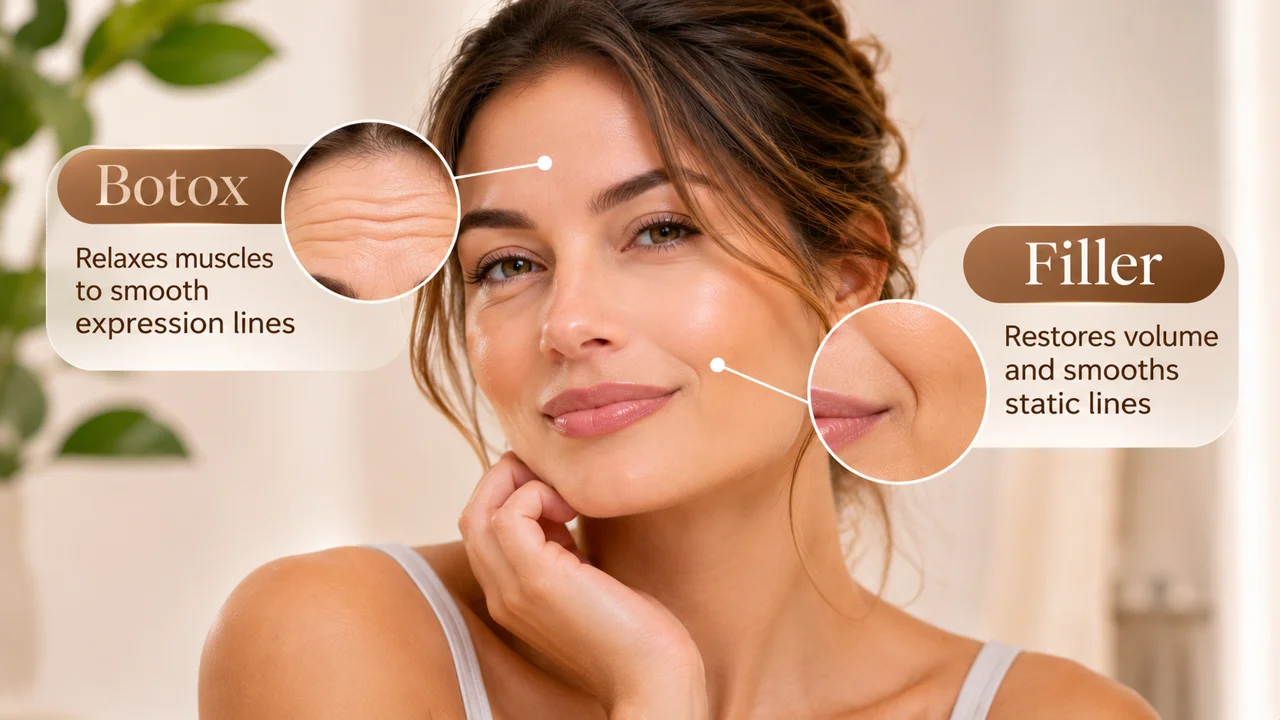
Match the treatment to the priority that matters most to you.
If your priority is... | Ask about... at your consultation |
|---|---|
Softening lines that appear when you move | Botox |
Restoring fullness to lips, cheeks or hollows | Dermal filler |
Fewer visits per year | Filler, where suitable |
Softening lines with no added volume | Botox |
Improving skin quality, not lines or volume | |
Gradual, longer-term collagen support |
Pro tip: Ask your injector to note the product, amount and areas treated after every visit, so you can compare plans and plan the next appointment.
Questions to Ask at Your Botox or Filler Consultation
The right questions help you understand the plan, not just the product.
What we are evaluating on:
Who performs the treatment and their training
Whether your concern is muscle-based or volume-based
A clear, written cost estimate
Aftercare and complication planning
Questions worth asking
Is my concern caused by movement, volume loss or both?
Which product do you suggest, and why?
How much product do you expect to use?
What should the result look like at two weeks?
What happens if I'm unhappy or have a reaction?
How often would I need maintenance?
Our medical aesthetic consultation guide has a fuller checklist.
Timing before the holidays
In late November 2026, many people are planning around holiday gatherings.
Botox tends to need about two weeks to settle.
Filler may need several days for swelling and bruising to fade.
If you have a December event, consider booking early enough to leave room for a follow-up.
Frequently Asked Questions
1. Is Botox or filler better for wrinkles?
It depends on the type of wrinkle. Botox tends to suit lines that appear with movement, while filler tends to suit lines and folds visible at rest. Your injector can confirm which applies to you.
2. Are Botox and filler the same thing?
No. Botox is a neuromodulator that relaxes muscles, while filler is a gel that adds volume. They are often used together, but for different jobs.
3. Does Botox or filler last longer?
Filler tends to last longer. Per the clinic, it lasts about 6 to 18 months, compared with about 3 to 6 months for Botox. Duration varies by area, product and person.
4. Is Botox safer than filler?
Neither is risk-free. Both are generally well tolerated in trained hands, but each carries different risks. Filler has a rare risk of blocking a blood vessel, so choosing an experienced, regulated provider matters for both.
5. Filler vs Botox for smile lines: which suits me?
Filler is more often discussed, because smile lines are usually linked to volume loss. Botox isn't designed to fill folds. Your provider can assess whether filler, another treatment or both fits your face.
The Bottom Line
Botox vs filler is not about which one is "better." It's about matching the treatment to the cause. Botox softens lines from movement, filler restores volume and support, and many faces benefit from a plan that uses each where it fits.
Visage Rejuvenation is a nurse-led clinic in Waterdown, between Burlington and Hamilton, with Thursday appointments until 7 pm for anyone coming from work. Read about dermal filler treatments, and see how to maintain your injectable results once you have a plan.
Start with a consultation, and ask about combining both if you have expression lines and volume loss together. When you're ready, you can book a nurse injector consultation online.
This article is for education and does not replace personal medical advice. Individual results vary. Book a consultation to discuss your health, goals and options.
Call
(905) 690-8332Get in touch
Send us a message
Questions about a treatment, booking or pricing? Send us a note and we will get back to you.