
IPL Hair Removal vs Laser vs Electrolysis: Which Fits Your Skin and Hair?
Medically reviewed by Nicole Francis, NP, on November 19, 2026.
Published November 2026
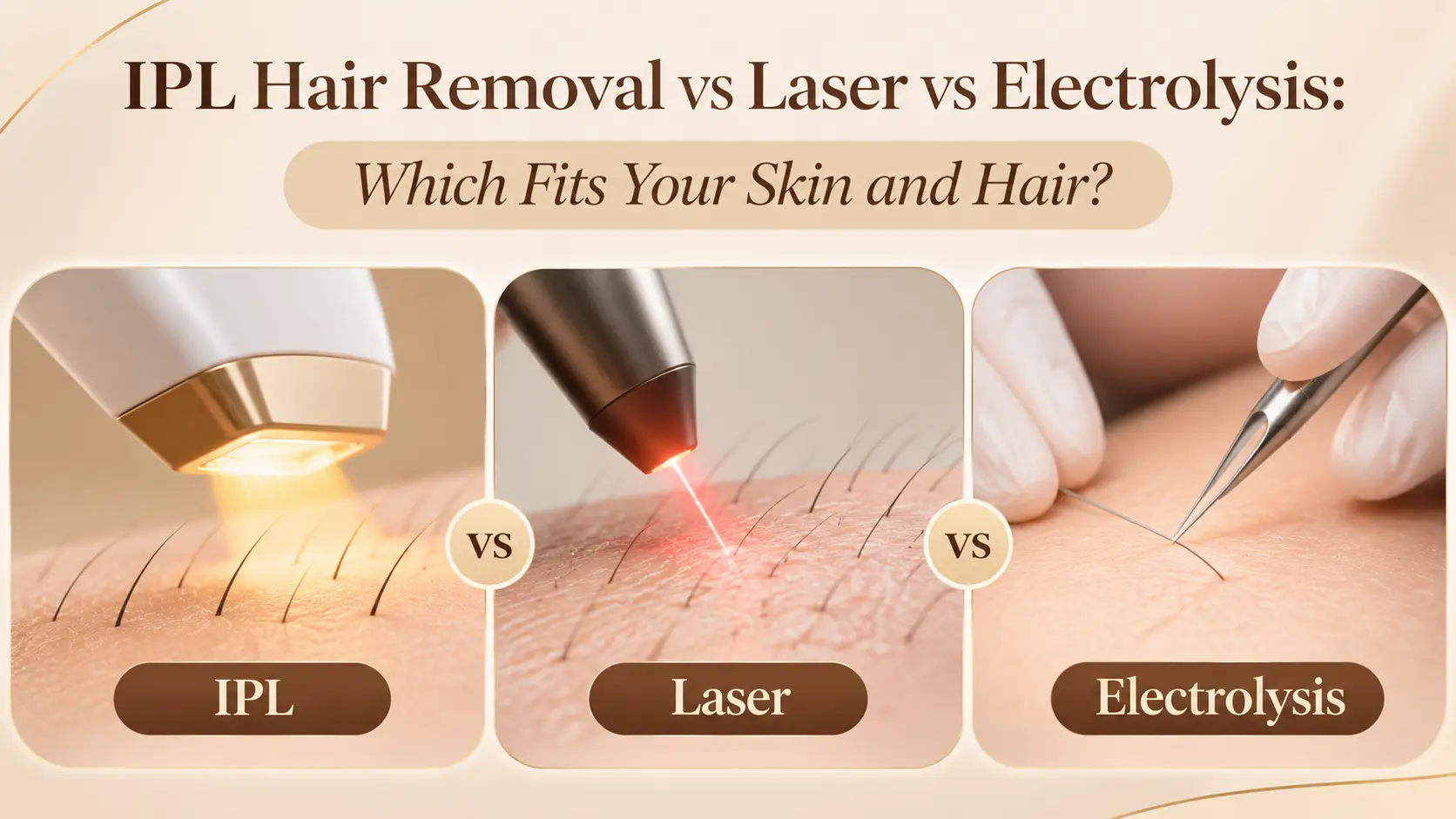
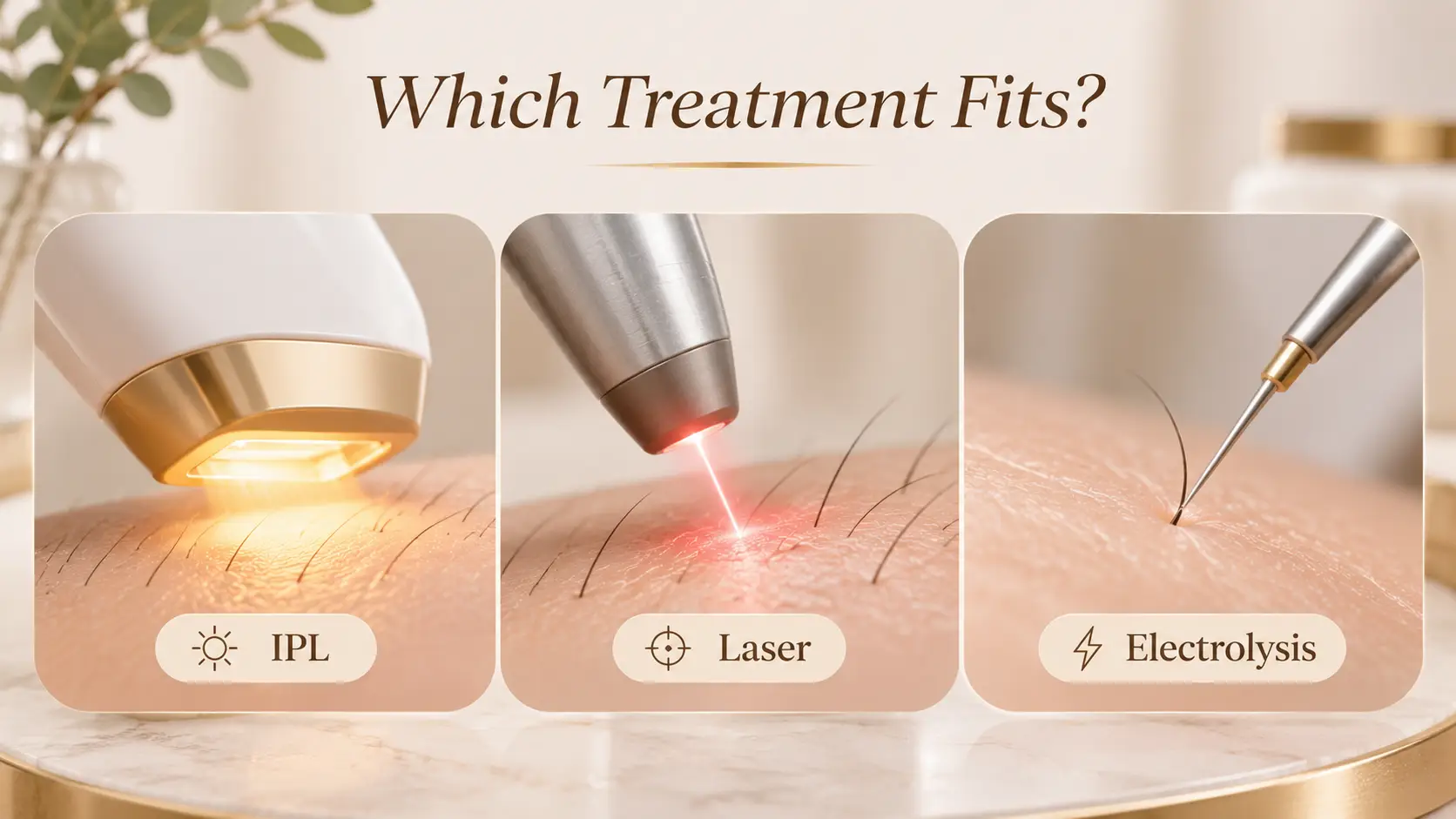
IPL hair removal, laser and electrolysis all target the hair follicle, but each suits different people.
Laser tends to work well for dark hair on light to medium skin. IPL uses broader, less focused light and usually needs more sessions.
Electrolysis treats one follicle at a time and can work on any hair colour.
TL;DR
Laser: one focused wavelength, efficient for larger areas with darker hair.
IPL: a broad spectrum of light, best suited to light skin with dark hair.
Electrolysis: a fine probe with an electric current. It works on blonde, grey, red and white hair.
Permanent hair removal: electrolysis is the method most often described this way. Laser and IPL are designed for long-term reduction.
Your skin tone, hair colour and the area you want treated decide the right match.
Have you ever bought a hair removal device, used it twice, then hidden it in a drawer?
Me neither. Here is why it happens to so many people.
The three methods sound alike, but they work in very different ways.
This guide was reviewed by a nurse practitioner. It explains how each method works so you can choose a method before you choose a clinic.
How Laser, IPL and Electrolysis Remove Hair
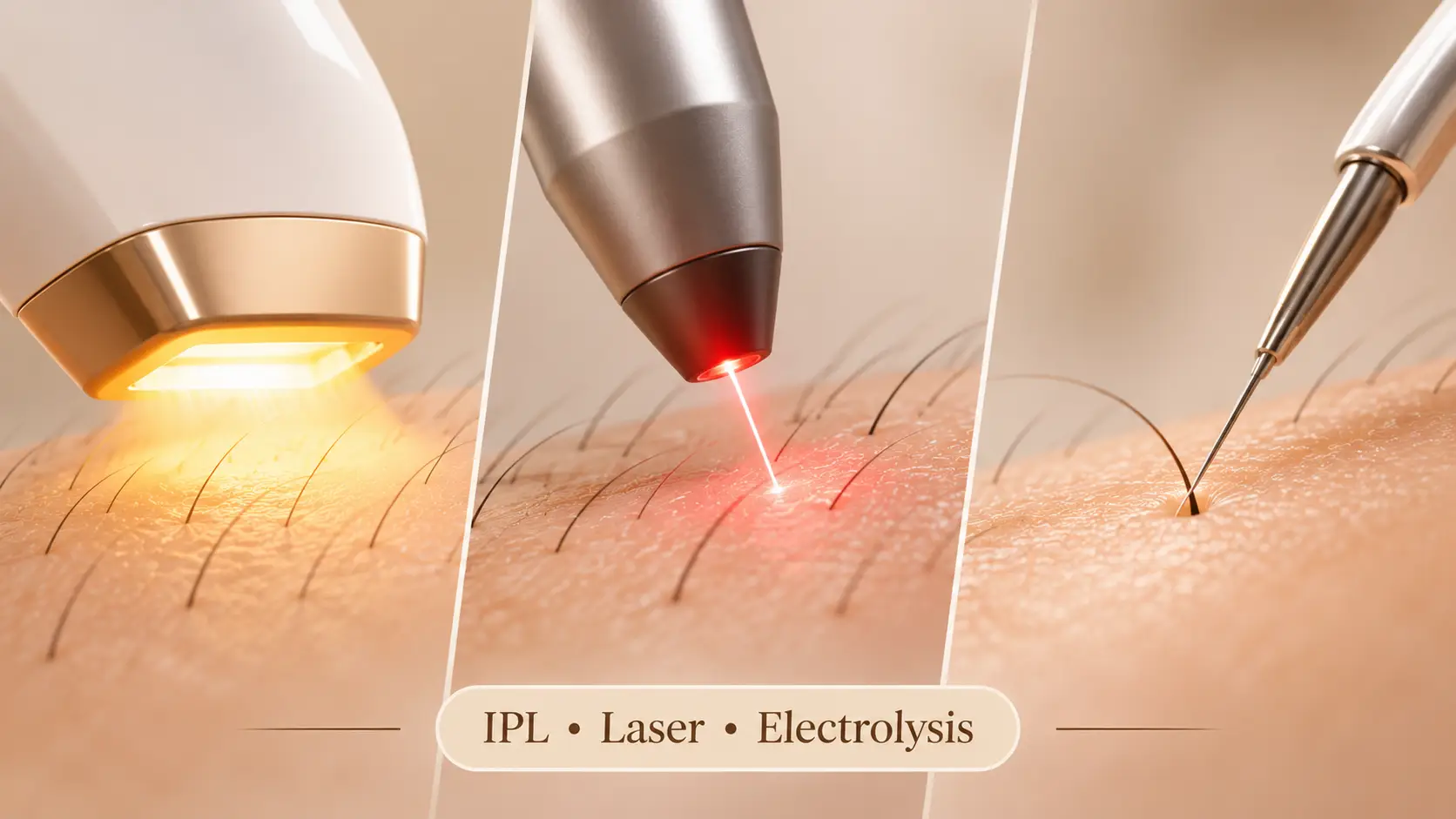
All three methods damage the hair follicle so the hair grows back weaker or not at all. They differ in how they reach it: focused light, broad light or electricity.
How laser hair removal works
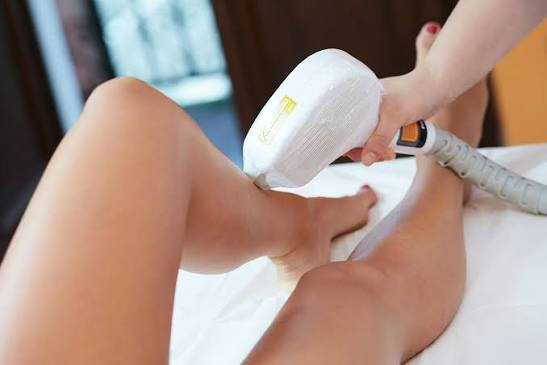
Laser uses one concentrated wavelength of light. The pigment in your hair (melanin) absorbs that light and turns it into heat, which damages the follicle.
Key point: the laser aims at dark pigment, so the contrast between hair and skin matters.
Where it fits: legs, underarms, back, bikini and other larger areas.
Typical course: about 6 to 8 sessions at many clinics, spaced several weeks apart.
Worth discussing if: you have darker hair and want to treat a medium or large area.
For the full picture of a laser session, see our page on laser hair removal in Waterdown.
How IPL hair removal works
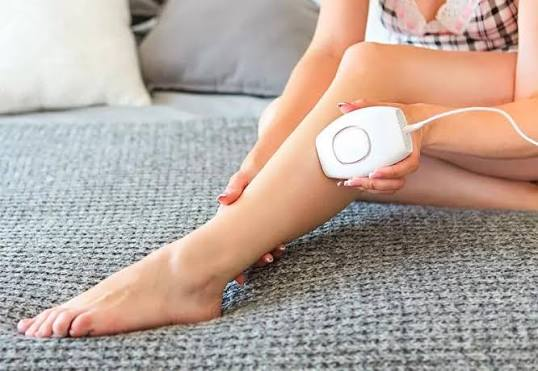
IPL stands for intense pulsed light. Instead of one focused beam, it sends out a broad range of wavelengths at once, like a camera flash.
Key point: the energy is spread across many wavelengths, so less of it reaches each follicle.
Where it fits: light skin with dark, coarse hair.
Typical course: often more sessions than laser. Results vary.
Worth discussing if: your skin is fair, your hair is dark and you are happy with gradual results.
IPL has other uses in skin care too. Clinics use it to treat redness, sun spots and acne, which is why you may see it offered as an IPL acne treatment or a photofacial.
How electrolysis works
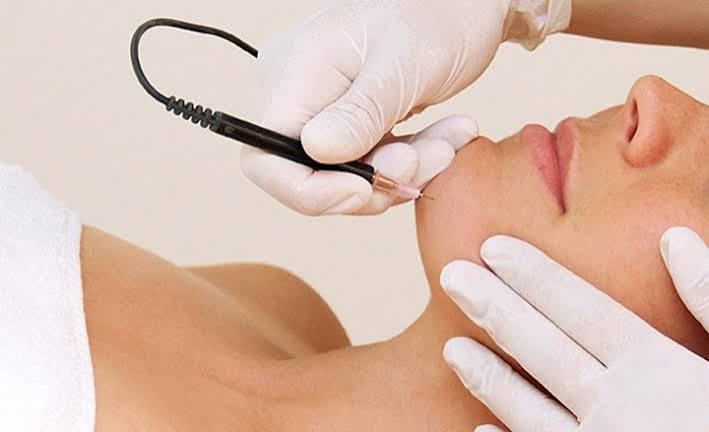
Electrolysis places a hair-thin probe into each follicle. A small electrical current then destroys the growth cells at the root.
There are three main types:
Type | How it works | Notes |
|---|---|---|
Galvanic | A chemical reaction from direct current | Slower per hair |
Thermolysis | Heat from a radio-frequency current | Faster per hair |
Blend | Combines both | Common for coarse or curved hair |
Key point: electrolysis does not rely on pigment, so hair colour does not limit it.
Where it fits: small areas such as the chin, upper lip and eyebrows.
Typical course: many short sessions over several months, because each hair is treated separately.
Worth discussing if: your hair is light, grey or very fine, or you have a few stubborn hairs.
Laser vs IPL vs Electrolysis: Side-by-Side Comparison
Each method comes out ahead on a different measure.
We compared them on these five points:
How it works and what it targets
Which skin tones and hair colours it suits
How many sessions it tends to take
Comfort and downtime
Which areas it fits best
Factor | Laser | IPL | Electrolysis |
|---|---|---|---|
Energy source | One focused wavelength | Broad-spectrum light | Electric current through a probe |
Targets | Hair pigment | Hair pigment | The follicle itself |
Hair colour | Dark hair | Dark hair | Any colour |
Skin tone | Light to darker, depending on the laser type | Mostly light skin | Any skin tone |
Speed per session | Fast for large areas | Fast for large areas | Slow, one hair at a time |
Typical course | About 6 to 8 sessions, results vary | Often more than laser | Many sessions over months |
Outcome | Long-term reduction | Long-term reduction | Often described as permanent |
Best areas | Legs, underarms, back, bikini | Legs and arms on fair skin | Face, brows, small patches |
→ Large area + dark hair = laser is usually the first option to discuss
→ Light, grey or fine hair = electrolysis is usually the first option to discuss
Which Is Permanent Hair Removal, and Which Is Reduction?
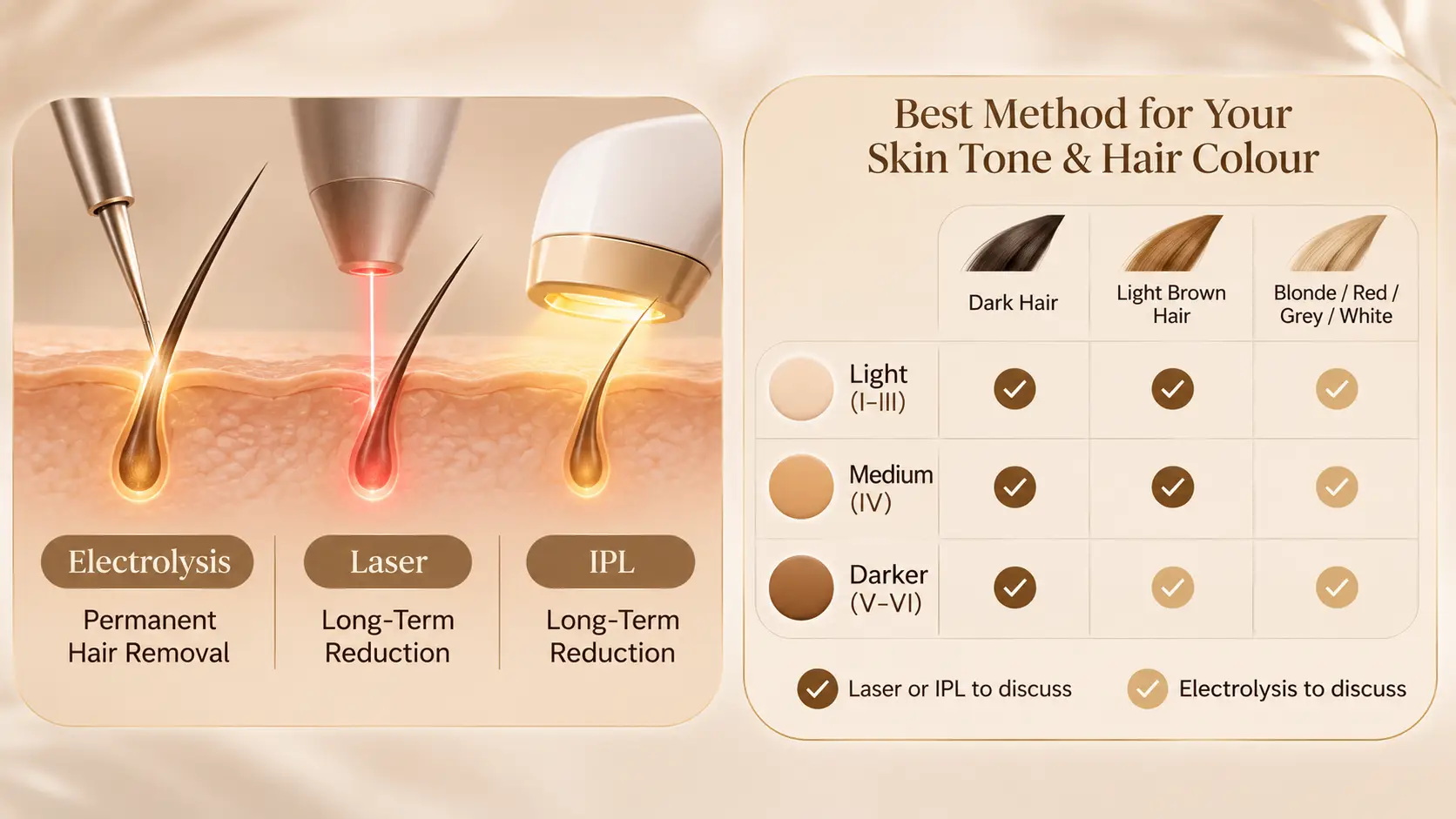
Electrolysis is the method most often described as permanent hair removal. Laser and IPL are designed for long-term hair reduction.
That difference is more than wording.
Reduction means fewer hairs. The ones that return tend to be finer and lighter.
Removal means a treated follicle stops producing hair.
With any method, hormones, medications and age can still trigger new hair from follicles that weren't treated.
This is where expectations often go wrong. A clear plan from the start avoids it.
Many people book an occasional maintenance session after finishing a laser course. Others use electrolysis to clear the few hairs the laser could not reach.
Which Method Suits Your Skin Tone and Hair Colour?
Skin tone and hair colour are the two biggest factors in choosing a method. Light-based methods need contrast between hair and skin. Electrolysis does not.
Clinicians often describe skin tone with the Fitzpatrick scale. It runs from type I (very fair) to type VI (deeply pigmented).
Your skin | Dark hair | Light brown hair | Blonde, red, grey or white hair |
|---|---|---|---|
Light (I to III) | Laser or IPL to discuss | Laser to discuss, results vary | Electrolysis to discuss |
Medium (IV) | Laser to discuss | Laser to discuss, results vary | Electrolysis to discuss |
Darker (V to VI) | Laser types suited to darker skin | Electrolysis or laser to discuss | Electrolysis to discuss |
Dark hair on light to medium skin
Light-based methods handle this combination well. The light is drawn to the dark hair and mostly passes over the lighter skin.
Darker skin tones
Darker skin contains more melanin, so it can absorb some of the light meant for the hair. Some laser wavelengths are designed to reach deeper while affecting the skin surface less. IPL is generally less suited to darker skin. A patch test shows how your skin responds.
Blonde, red, grey or fine hair
Light-based methods struggle here because the hair has little pigment to absorb the light. Electrolysis is usually the method to discuss for these hair types.
Pro tip: Stop tanning and using self-tanner for a few weeks before any light-based treatment, so the energy goes to your hair and not your skin.
Laser Hair Removal vs Electrolysis for Facial and Hormonal Hair
For facial hair, the right method depends on the hair's colour, thickness and cause.
Laser tends to reduce dark, coarse chin hair over a course of sessions.
Electrolysis tends to suit lighter stray hairs and fine hairs.
Hormonal hair adds another layer.
Conditions such as PCOS (polycystic ovary syndrome) can cause coarse hair on the chin, jaw and upper lip.
Hormone changes around perimenopause can also bring new chin hairs.
While hormones stay active, new hairs may keep appearing whichever method you use.
If the changes seem sudden or come with other symptoms, book a medical assessment as well as any hair removal.
Our article on the signs of perimenopause explains other changes to watch for.
Best Method by Body Area
The size of the area matters as much as the hair itself. Treating a full leg one hair at a time is a big commitment.
Body area | Laser | IPL | Electrolysis |
|---|---|---|---|
Upper lip and chin | Good for dark, coarse hair | Possible on fair skin | Good for light or stray hairs |
Eyebrows | Not used near the eye | Not used near the eye | Often used for shaping |
Underarms | Good fit | Possible on fair skin | Slow for the full area |
Bikini | Good fit | Possible on fair skin | Used for small patches |
Legs and arms | Good fit | Possible on fair skin | Very slow |
Back and chest | Good fit | Possible on fair skin | Very slow |
Electrolysis on both legs is possible. So is painting your house with a toothbrush.
How Many Sessions Does Each Method Take?
Every method needs a series of sessions because hair grows in cycles. At any one time, only the hairs in the active growth phase (anagen) respond well.
Method | Typical course | Spacing | Maintenance |
|---|---|---|---|
Laser | About 6 to 8 sessions at many clinics | Every 4 to 8 weeks, depending on the area | Occasional touch-ups may help |
IPL | Often more than laser | Every few weeks | Regular touch-ups are common |
Electrolysis | Many short sessions | Weekly or every few weeks at first | Fewer as hairs clear |
These are typical ranges. Results vary by person, area and hair type.
For a closer look at a full laser course, read our guide to laser hair removal benefits and treatment expectations.
At-Home IPL vs Professional Laser: What's the Difference?
At-home IPL hair removal devices use much lower energy than clinic equipment. That makes them safer to use at home, but results tend to come more slowly and need ongoing use.
Research on low-energy home IPL, such as this published study on low-energy home IPL, describes hair reduction from repeated use, not a one-time fix.
Factor | At-home IPL | Professional laser |
|---|---|---|
Energy level | Low | Higher, adjusted for each area |
Who operates it | You | A trained professional |
Skin assessment | A built-in sensor at most | Your skin is assessed before treatment |
Consistency | Depends on your routine | A scheduled course |
Results | Gradual, needs regular upkeep | Long-term reduction for many people |
Best for | Light maintenance on fair skin with dark hair | Larger areas and longer-lasting reduction |
Home devices aren't useless. They're a different tool for a different job.
What clinicians commonly notice in consultations: many people come in after months of using a home device and find their results faded once they stopped. A clear, scheduled course is often what was missing.
IPL Hair Removal Side Effects, Pain and Downtime Compared
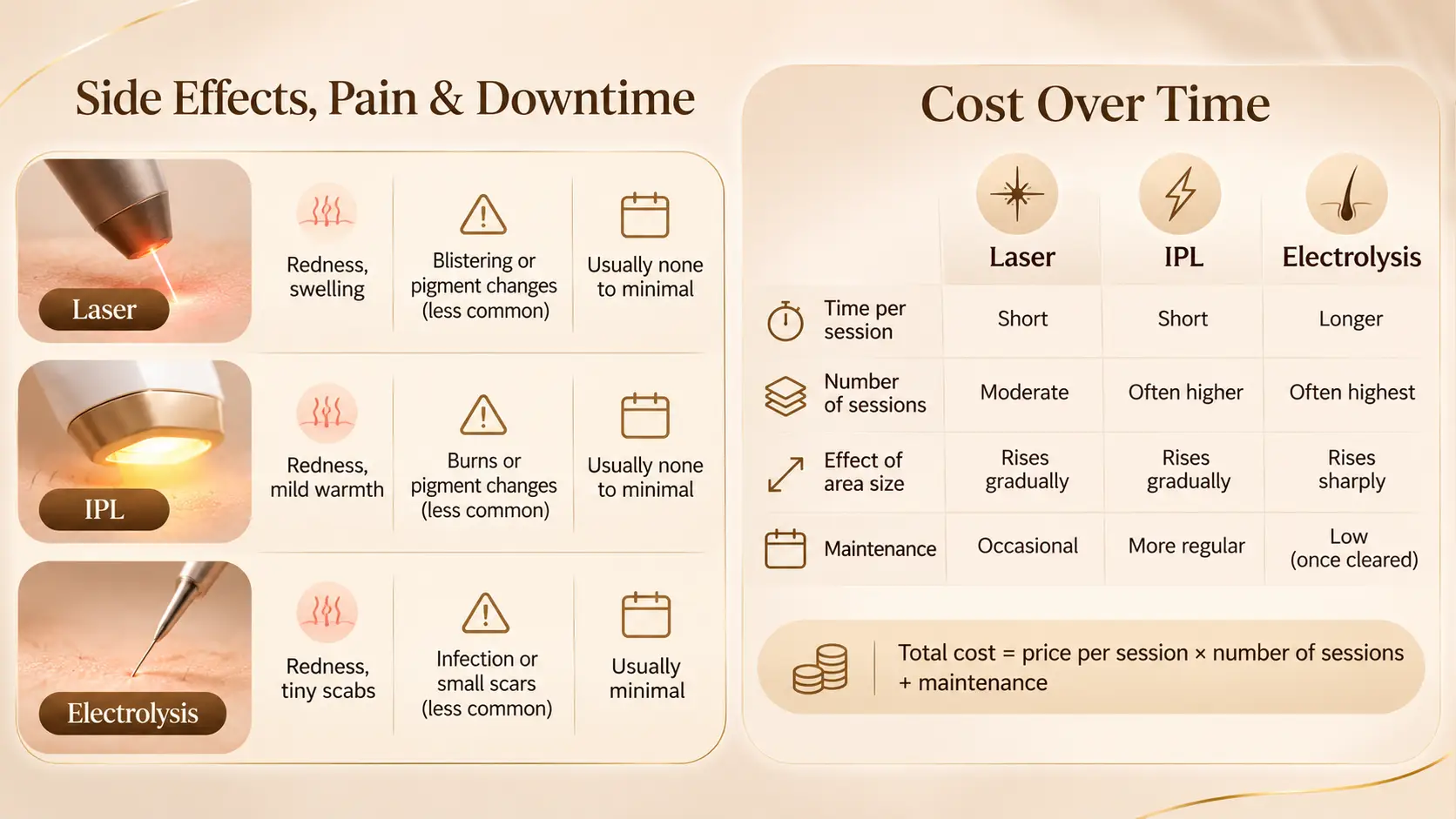
All three methods are generally well tolerated, but none is free of side effects. Knowing them helps you plan around work and events.
Method | Common side effects | Less common | Downtime |
|---|---|---|---|
Laser | Redness, swelling around follicles | Blistering, lighter or darker patches of skin | Usually none to minimal |
IPL | Redness, mild warmth | Burns or pigment changes, especially on tanned or darker skin | Usually none to minimal |
Electrolysis | Redness, tiny scabs | Infection or small scars if aftercare is skipped | Usually minimal |
These factors can affect whether any method suits you:
Pregnancy or breastfeeding
Medications that make skin more sensitive to light
Active skin conditions, cuts or infections in the area
A recent tan
Certain medical conditions or past medical history
Wait, you might be thinking: does laser hurt more than electrolysis?
Most people describe each laser pulse as a quick snap, like an elastic band, that passes in seconds. Electrolysis often feels like a small sting with each hair, and sessions can run longer. Comfort varies by area, so ask about cooling and numbing options.
Which Costs More Over Time?
Your total cost depends on the number of sessions, the size of the area and how much maintenance you need. A cheaper session does not always mean a cheaper plan.
→ Total cost = price per session × number of sessions + maintenance
Cost driver | Laser | IPL (clinic) | Electrolysis |
|---|---|---|---|
Time per session | Short for most areas | Short | Longer when there are many hairs |
Number of sessions | Moderate | Often higher | Often the highest |
Effect of area size | Cost rises gradually | Cost rises gradually | Cost rises sharply |
Maintenance | Occasional | More regular | Low once hairs are cleared |
For large areas, laser often turns out to be the more predictable plan. For a handful of light hairs, electrolysis may cost less overall.
Some clinics offer payment plans through third-party lenders. The lender decides approval and rates. Learn more about financing programs for aesthetic treatments.
Pro tip: Ask every clinic for the price of the full course, not a single session, so you can compare methods fairly.
When to Start Hair Removal in Hamilton and Burlington
November is a good time to start a laser course. Skin is usually less tanned in late fall and winter, which lowers the risk with light-based treatments.
If you start in November or December:
With sessions every 4 to 8 weeks, your course can be well underway by late spring.
Your skin stays covered in the colder months, which makes it easier to avoid the sun.
You reach summer with fewer sessions left to fit around holidays.
Starting in June means working around sun exposure and beach days, which makes the schedule harder to keep.
Our guide to laser hair removal for Burlington residents has more on planning sessions around local routines.
Which Method Fits Your Priority?
Your top priority shapes which method to ask about. Use this table to prepare for your consultation.
If your priority is... | Ask about... |
|---|---|
Treating large areas like the legs or back | A laser course and how far apart sessions are |
Light, grey, red or very fine hair | Electrolysis as an alternative |
A darker skin tone | Laser types designed for darker skin, plus a patch test |
A few stubborn chin hairs | Electrolysis, or laser first and then electrolysis for strays |
Hormonal hair growth | A medical assessment alongside hair removal |
No single method is right for everyone.
A consultation and patch test confirm what suits your skin and hair. To see the full range of light-based treatments, browse our laser treatments page.
FAQs About IPL Hair Removal, Laser and Electrolysis
1. Laser hair removal vs electrolysis: which is better for me?
It depends on your hair and the area you want treated. Laser tends to suit dark hair over larger areas. Electrolysis suits any hair colour and smaller areas. A consultation confirms the right fit.
2. Is IPL the same as laser hair removal?
No. Laser uses one focused wavelength, while IPL uses a broad range of light. Both target hair pigment, but laser tends to deliver energy to the follicle more precisely.
3. Which works best for fine or light hair?
Electrolysis is usually the method to discuss, because it does not depend on pigment. Laser and IPL tend to struggle with blonde, grey, red and very fine hair.
4. Is electrolysis or laser better for hormonal chin hair?
Laser may reduce dark, coarse chin hair over a course of sessions. Electrolysis may suit lighter stray hairs. Hormonal hair can keep coming back, so a medical assessment is also worth discussing.
5. Can I switch from laser to electrolysis for stray hairs?
Yes, many people do. Laser first reduces most of the hair, then electrolysis can target the light or fine hairs that remain. Ask how long to wait between the two.
The Bottom Line on IPL Hair Removal, Laser and Electrolysis
IPL hair removal, laser and electrolysis each solve a different problem. Laser tends to suit dark hair over larger areas. IPL tends to suit fair skin with dark hair. Electrolysis can treat any hair colour, one follicle at a time.
Your skin tone, hair colour and the area you want treated matter more than any method's reputation.
If you live in Waterdown, Hamilton or Burlington, Visage Rejuvenation offers laser hair removal from a nurse-led team, starting with a consultation. Learn about medical aesthetics in Hamilton or contact the team with your questions.
Start with a consultation and patch test, and ask about electrolysis as an alternative if your hair is light or grey.
Call
(905) 690-8332Get in touch
Send us a message
Questions about a treatment, booking or pricing? Send us a note and we will get back to you.